


By Pavel Manchenko, Founder and Managing Director, Marine MAN
Offshore wind has spent the last decade solving engineering problems: bigger turbines, deeper water, longer export cables. From where I sit, at the head of a crewing company that has supplied seafarers to shipowners since 2007, the next bottleneck is more human. Every new wind farm needs a fleet of vessels to build and maintain it, and every one of those vessels needs a qualified marine crew. Service operation vessels need DP officers and engineers able to run complex hybrid power plants. Crew transfer vessels need skippers and deckhands who can put technicians onto a turbine safely, day after day, in a North Sea swell.
The industry is adding vessels faster than it trains the people to sail them. Owners and charterers who start planning crews only when the newbuilding leaves the yard often find that the officers they need are already committed elsewhere. In this article I look at the crewing profiles wind vessels require, the three pools wind operators can draw from, and how to turn those pools into reliable crews.
Two Vessel Types, Two Crewing Models
Wind farm support falls broadly into two vessel categories with very different crewing needs.
A service operation vessel, or SOV, is effectively a floating hotel and workshop. It stays in the field for weeks at a time, holds position next to turbines on dynamic positioning, and transfers technicians across a motion-compensated gangway. Its marine crew looks much like that of an offshore supply or construction vessel: a master and DP officers with offshore experience, engineers capable of running diesel-electric or hybrid power systems, an electro-technical officer, deck ratings who are comfortable around cranes and gangways, and a hotel department large enough to look after dozens of technicians.
A crew transfer vessel, or CTV, is a small, fast catamaran or monohull that runs from port to the wind farm and back, often within a single shift. Its crew is small: a skipper, one or two deckhands and sometimes an engineer. What matters most here is boat handling in a seaway, pushing on to a turbine boat landing safely, and a strong safety culture during every transfer. Deep-sea experience counts for less than hours in small craft.
Construction adds a third group: jack-up installation vessels, cable layers and commissioning vessels, which need crews with heavy-lift, DP and project experience during the building phase and then move on to the next site.
Each profile needs its own sourcing strategy. Treating them all as "wind crew" is the first mistake operators make.
What Wind Adds on Top of STCW
STCW certificates are only the starting point. Wind clients typically expect marine crews to hold GWO Basic Safety Training, which covers first aid, manual handling, fire awareness, working at heights and sea survival, and many add their own site and vessel inductions. On SOVs, DP certification and sea time requirements apply just as they do in oil and gas. CTV skippers usually need national small-craft or workboat qualifications and documented experience on similar vessels.
These requirements are manageable, but they take time and money. A merchant officer who would make an excellent SOV mate still needs GWO training, client inductions and familiarisation before joining. Operators that build these steps into their plans avoid the situation where a willing and capable candidate cannot board because one certificate is missing or expired.
Pool One: Offshore Oil and Gas
The most natural source of SOV crews is the offshore oil and gas sector. DP officers, engineers and deck crews from platform supply vessels, construction support vessels and diving support vessels already have most of the core skills: holding position, working close to installations, managing complex power systems and operating under strict client safety regimes.
Many of these seafarers are open to wind. Some value the long-term outlook of renewable energy; others are attracted by regular rotations and work closer to home in European waters. The challenge is that oil and gas still competes hard for the same people, especially for experienced DP officers. Wind operators that offer predictable rotations and clear career paths are better placed to win them.
Pool Two: the Merchant Fleet
The second pool is larger but needs more preparation. Officers and ratings from container ships, tankers and bulk carriers bring solid seamanship, watchkeeping and engineering skills. What they often lack is DP experience, an offshore safety culture and familiarity with personnel transfer.
Even so, the merchant fleet is an important source, particularly for engineers, ETOs and ratings. Many seafarers looking for sea jobs are drawn to wind by the promise of shorter trips and more time at home, and need only targeted training to make the move. A structured conversion route, combining GWO training, a DP induction and supervised time on board, can turn a good merchant officer into a good wind officer within a reasonable period.
Pool Three: New Entrants and Cadets
The third pool is the next generation. Cadets and junior officers who start their careers on wind vessels grow up with the industry's standards and are more likely to stay in the sector. Cadet berths on SOVs and offshore wind modules in maritime training programmes are practical ways to build this pool.
This pool takes years to mature, but operators that invest now will rely less on poaching experienced crews from oil and gas later, and will pay less for them.
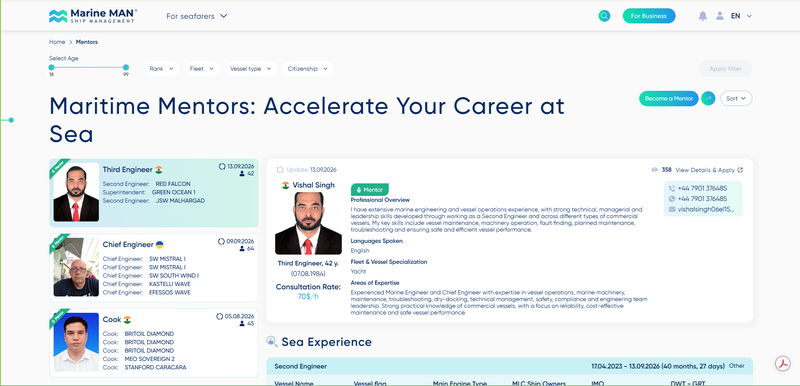
The BIMCO/ICS Seafarer Workforce Report keeps warning that the industry trains too few officers for the fleet it is building, and offshore wind will feel that gap before most sectors. We chose to act rather than quote the report. JobMarineMan is the first crewing platform to run a mentorship programme for seafarers, and it is already working, not planned. Experienced masters, chief engineers and DP officers apply, Marine MAN verifies their sea service and approves them, and they become visible to every seafarer on the platform. A cadet on his first SOV contract can choose a mentor who has done the job for twenty years and talk to him directly; the two of them agree the terms between themselves, and the platform does not stand in the middle. Nobody else in crewing has built this. That is how a new generation of specialist seafarers gets built: not by waiting for training systems to catch up, but by connecting the people who know with the people who want to learn.
The Hotel Department: the Crew Technicians See First
On an SOV, the marine crew is only part of the story. Dozens of technicians live on board for weeks, and their productivity depends on sleep, food and a sense of order. Cooks, stewards and hotel staff therefore have a direct effect on how much maintenance gets done each day. A vessel with a strong galley and a well-run accommodation is easier to fill with technicians and keeps its charterer happier.
Hotel positions are often treated as easy to fill, but the standard expected on an SOV is closer to an offshore accommodation unit than to a cargo ship. Cooks need to cater for large numbers and varied diets, and stewards need to keep cabins and common areas in order with a constant rotation of guests. These roles deserve the same planning as officers.
CTV Crews: Small Teams, High Responsibility
A CTV may carry only three crew members, but each of them carries a lot of responsibility. The skipper decides whether conditions allow a safe transfer, often under pressure from a schedule that technicians and clients care about. Deckhands manage the bow, the ropes and the technicians stepping across. Fatigue is a real risk: long transits, early starts and waiting on weather add up over a rotation.
Operators that crew CTVs well pay attention to watch patterns and rest hours, give skippers the authority to say no, and invest in experienced deckhands who can mentor newcomers. Crews living close to the operating port often make the most sense here, since rotations are short and travel needs to be simple.
Building Crews Across Borders
Wind farms are concentrated in Europe and increasingly in Asia and North America, but the seafarers who crew them come from everywhere. Mixed-nationality crews are normal, and they work well when a few basics are in place: a common working language with a clear standard of English, consistent procedures on board and leaders who know how to manage different cultures. Operators should also check flag-state and coastal-state rules on crew nationality early, since some markets set requirements for local or regional crew. Planning for these factors from the start avoids last-minute changes to crew lists and keeps vessels compliant.
Crewing Management as a Project Discipline
Turning these pools into reliable crews is a matter of crewing management, not ad hoc hiring. Wind farms run on project schedules with clearly defined phases, and crew planning should follow the same logic.
During construction, vessel numbers peak and crews need heavy-lift, DP and installation experience. During operations and maintenance, the fleet stabilises around SOVs and CTVs on long-term charters, and continuity of crew becomes more important than speed. A good crewing plan maps these phases, estimates how many officers and ratings each vessel needs per rotation, identifies where they will come from and budgets for training and inductions in advance. The budget should also cover overlap days for handovers, travel to and from remote ports and the cost of keeping reliefs current on client inductions.
Pre-approved reliefs are just as important. An SOV on a long-term charter should have a bench of officers who have completed the client's induction and can step in at short notice. Without that bench, a single sick leave can delay a service campaign or force the vessel to sail short-handed.
Questions to Settle Before the Vessel Arrives
Before a new SOV or CTV joins a wind farm, a few questions should already have answers:
• Which positions need DP certification, and which need GWO training or client inductions?
• Where will each rank come from, and what is the backup if the first candidate falls through?
• What rotation pattern will the crew work, and does it match what candidates in the target market expect?
• Who verifies certificates, and how are expiry dates tracked?
• What training budget is set aside for conversion from oil and gas or the merchant fleet?
Answering them early turns crewing from a last-minute scramble into a planned part of the project.
Keeping Crews in a Competitive Market
Wind operators compete for the same people as oil and gas, cruise and specialised shipping. Retention depends on the basics done well: rotations that run on schedule, wages paid on time, decent accommodation and a respectful working culture between the marine crew and the technicians they serve.
Career progression matters too. A deckhand on a CTV who sees a route to skipper, or a junior DPO on an SOV with a clear path to senior DPO and master, has a reason to stay. Operators that make these routes visible will spend less on recruitment and lose fewer experienced crew members to competitors. Keeping a good team together across rotations also pays off in safety and productivity, because people who know each other work better under pressure.
How We Support Wind Operators at Marine MAN
I founded Marine MAN in 2007 to support shipowners, managers and charterers with crew sourcing and crew management. Today we are an IMO DOC holder certified to ISO 9001:2015 by Bureau Veritas, and around 750 seafarers serve on board client vessels through us at any given time.
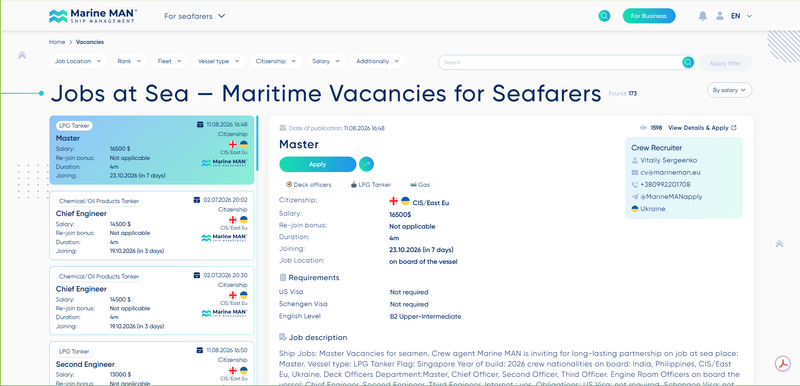
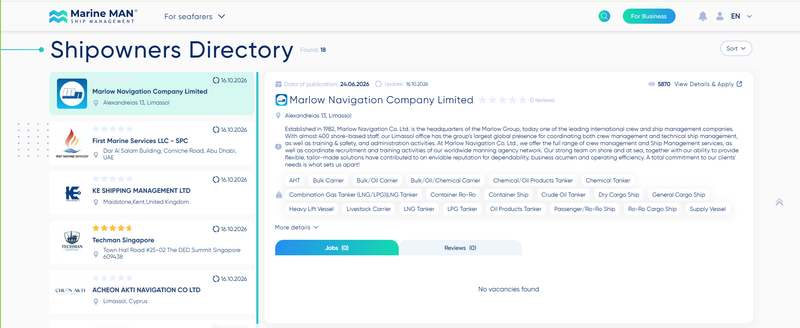
Through JobMarineMan, a platform for seafarer jobs with 200,000 CVs in 11 languages, operators can reach officers and ratings from Ukraine, Georgia, India, Sri Lanka, Indonesia, Vietnam and the Philippines directly. Our team then handles verification of certificates, documentation and mobilisation to the vessel.
Wind operators plan their farms a decade ahead, but too often they plan their crews a month ahead. The skills exist across the maritime world. The work is in finding the right people early and preparing them properly for life on a wind vessel.
Conclusion
Offshore wind will need many more seafarers in the coming years, from DP officers on SOVs to skippers on CTVs. They will come from oil and gas, from the merchant fleet and from a new generation of cadets. Operators that treat crewing as part of project planning, invest in conversion training and keep their people through reliable rotations will be ready when their vessels are. Wind farms are planned years ahead. Their crews should be too.
About The Author
In 2007, a 20-year-old deck officer from Kherson looked at how seafarers found work and decided it was broken. Contracts came by fax. Agencies sat between a captain and his next ship like toll booths, each one taking a cut and adding a week. Pavel Manchenko had been on the other side of that chain, on the bridge, waiting for a call that never came on time. So he founded Marine MAN to fix it.
Nineteen years later, he is still not 40, and the fix has become an ecosystem: recruitment offices in Ukraine, Georgia, India, Sri Lanka, Indonesia, Vietnam and the Philippines under one Marine MAN umbrella, connected on a single platform where AI now makes the first contact with a candidate and a human makes the decision. The numbers behind it: 200,000 seafarer profiles in the database, around 750 seafarers on board client vessels at any moment, and more than 35,000 seafarers who found their job through the platform. He holds a Master's degree from the Kyiv State Academy of Water Transport and is a certified DPA, CSO and MLC 2006 auditor, and he uses all of it: he still consults and mentors shipowners and crews on compliance, and he looks at every crew list the way an inspector would, because he has stood on the deck those inspectors walk.
In March 2022, Marine MAN had no office. Kherson, where the company was born and where most of its core team lived, was the first regional capital in Ukraine to fall under occupation, and Pavel's company was the first crewing business in the country to learn what that means from the inside. People left with one bag. Servers, documents, routines: everything had to be collected again, piece by piece, from flats and borrowed desks across Ukraine and Europe. Not one client vessel sailed short-handed. The team that came through 2022 is the team wind operators talk to today.
Ask Pavel what kept them going, and he gives you one sentence: "Never retreat, never surrender, and keep faith in God."
He has the energy of a founder half his age and the experience of one twice it. If you want to talk about how your fleet is crewed, talk to Pavel.
Let's discuss cooperation. Want to know how our team can help your business? Contact us: b2b@marineman.eu
Note: The opinions, beliefs, and viewpoints expressed in this article do not necessarily reflect the opinions of offshoreWIND.biz